
PATIENT GUIDES / RESPIRATORY HEALTH
Lung health review
in Mexico.
A clear guide for Canadians exploring their next step.
Shortness of breath should be assessed—not normalized.
Understand your options ↓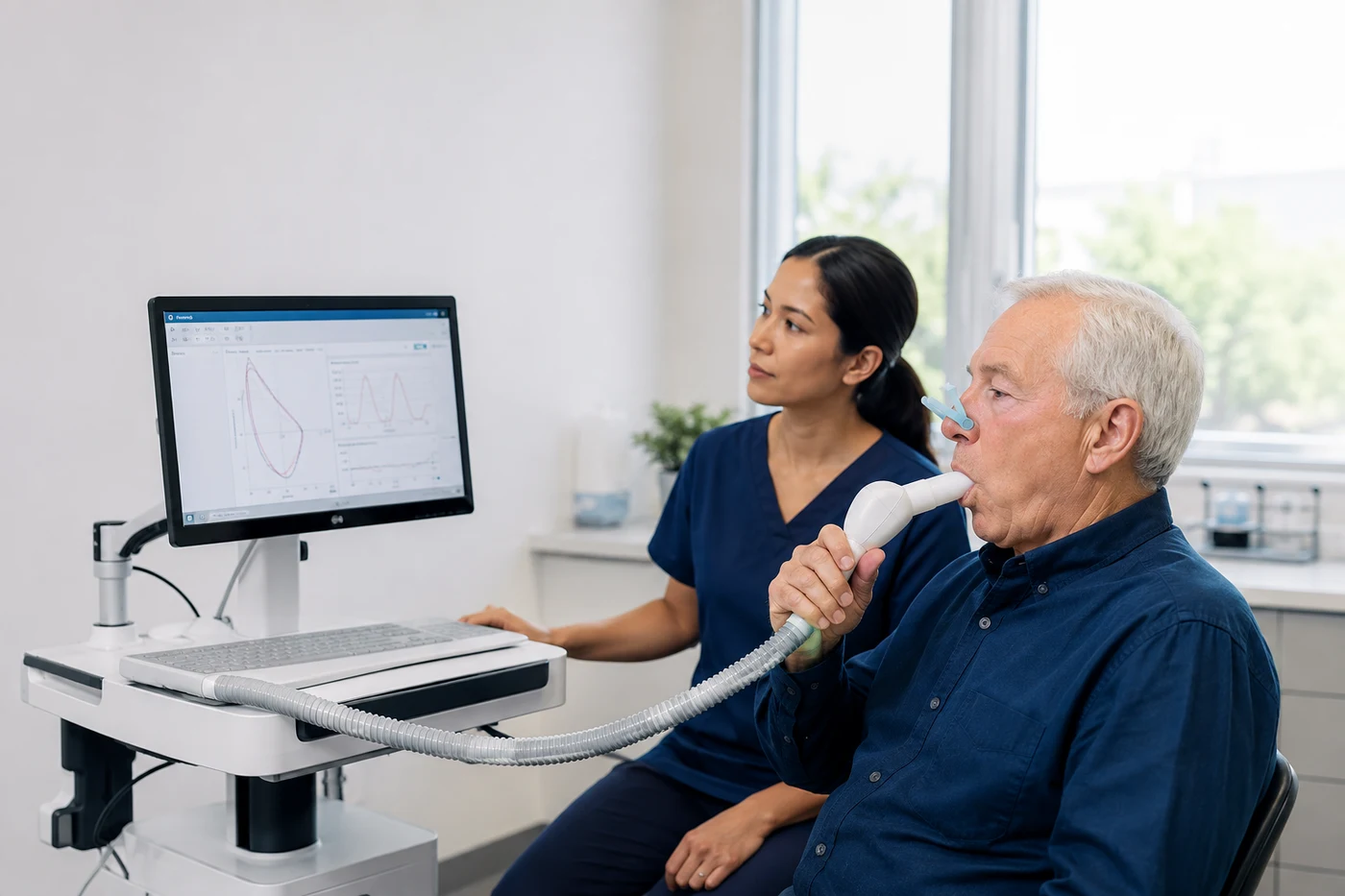
COPD and asthma can share symptoms but require different assessment and management. New or severe breathing difficulty may be an emergency.
Exploring care in Mexico does not mean committing to a procedure or investigation. It means gathering reliable information, understanding alternatives and confirming who is responsible before, during and after care. NAHA can help organize the enquiry and practical coordination, while independent licensed clinicians determine diagnosis, eligibility and treatment.
01 / START WITH YOUR CASE
Start with an individual assessment
A clinician may review exposure history, symptoms, medicines and inhaler technique, then consider spirometry and other tests based on the case.
A useful consultation should connect the proposed plan to your diagnosis, symptoms, priorities and overall health. Ask what information is still missing, what alternatives remain and what could change after an in-person assessment.
Symptoms and exposures
Bring a timeline of cough, wheezing, breathlessness, flare-ups and relevant smoke or workplace exposure.
Breathing tests
Spirometry can help assess airflow. Tests are selected to answer a clinical question, not to fill a package.
Your daily treatment
Bring inhalers and a medication list so technique, use and the ongoing action plan can be discussed.
Clinical background: NHLBI: COPD diagnosis.
02 / UNDERSTAND YOUR OPTIONS
Understand the proposed care
A chest X-ray can help identify other problems but does not by itself diagnose COPD. Treatment must be individualized.
Before deciding, request the treating clinician’s name and credentials, the facility, an itemized written quote, inclusions and exclusions, and the plan if additional care is required. A date or price should never substitute for informed consent.
Discuss limits and risks openly.
Asthma and COPD are not interchangeable diagnoses. A clinician may need different tests to distinguish them or identify another cause of breathlessness. If you use oxygen, confirm travel needs with your care team and airline well before departure.
The useful comparison is not just timing or price.
It is the complete care plan.
03 / THINK BEYOND THE VISIT
Make the review part of ongoing care.
Clarify action plans, inhalers, oxygen needs, travel fitness, altitude considerations and follow-up in Canada.
Before leaving, request a written summary in a language you understand: findings, treatment decisions, medicines, outstanding results and follow-up responsibilities. Know which clinician to contact and how quickly you should expect a response. Ask how records can be transferred to your Canadian care team with your permission.
04 / COMPARE THE COMPLETE PLAN
Before arranging care in Mexico.
The clinical plan
Who will assess you? What information is needed before an appointment can be confirmed?
The written quote
Request inclusions, exclusions, cancellation terms and the process for additional costs.
The return home
Agree who will review results, manage concerns and provide ongoing care.
Discuss travel fitness, provider credentials, insurance exclusions and aftercare with your care team before booking. Flying soon after surgery can increase complications. Do not assume that provincial coverage or standard travel insurance will pay for planned treatment or related complications.
Travel guidance: Government of Canada: Receiving medical care outside Canada.
Appointment availability is case-specific and must be confirmed by the provider. This guide does not promise faster treatment, a fixed price or a particular outcome.
Bring these questions to the consultation.
- Is this COPD, asthma or another condition?
- Do I need spirometry before and after a bronchodilator?
- Is my inhaler technique correct?
- Am I medically fit to travel?
- What is my written action plan?
05 / A CLEARER NEXT STEP
Start the conversation with NAHA.
NAHA helps organise your enquiry and clarify the information needed for provider review. Ask what coordination is available for your specific case, facility and destination. Clinical recommendations must come from the treating professional.
Your priorities, organised.
Tell us what care you are exploring, your location and whether you already have a diagnosis or recommendation.
Clarity before commitment.
Confirm the provider, services, costs and follow-up arrangements before deciding to proceed.
BEFORE YOU TAKE THE NEXT STEP
Common questions.
Can I enquire before I have a diagnosis?
Yes. Explain what care you are exploring. An enquiry is not a diagnosis, a confirmed appointment or medical clearance.
Is there one standard package?
No universal package is assumed in this guide. Ask for an individual scope and written quote after the provider has reviewed the information needed for your case.
Can I keep my Canadian care team involved?
Discuss the proposal with your regular clinician. Agree how records and results will be shared and who is responsible for ongoing care; do not assume follow-up is automatically arranged.
How should I send sensitive records?
Use the contact form or WhatsApp for the initial enquiry. Ask NAHA for its designated medical-records process before sending sensitive documents. Do not post private health details in public comments.
You may also find these helpful.

Flying Home After Surgery in Mexico: Recovery, Warning Signs and Follow-Up for Canadians
Explore your options, questions to ask and practical steps for planning your care.
Read the guide
Before You Book Surgery in Mexico: A 12-Point Checklist for Canadians
Explore your options, questions to ask and practical steps for planning your care.
Read the guide
How to Choose Safer Medical Care in Mexico: A Guide for Canadians
Explore your options, questions to ask and practical steps for planning your care.
Read the guide